
Addressing Workplace Violence in Health Care Settings
Violence in health care is on the rise, jeopardizing the safety and well-being of employees as well as patient...
Continue Reading Violence in health care is on the rise, jeopardizing the safety and well-being of employees as well as patient...
Continue Reading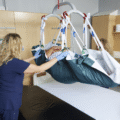
Lifts protect caregivers and patients alike by reducing exertion required to move patients from point A to point B....
Continue Reading
Pressure injuries of the heel are more common than many realize, accounting for 15 to 25% percent of total...
Continue Reading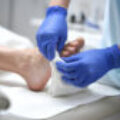
Skin complications are more common in patients with diabetes than in the general population. Even more, they’re often more...
Continue Reading
Critically ill patients are uniquely susceptible to hospital acquired pressure injuries (often shortened to HAPIs), which create unhappy realities...
Continue Reading
Sedation is the default in most ICUs. Yet sedation is more detrimental to patient health than widely recognized for...
Continue Reading
Nearly 47% of OR nurses incur a patient handling-related injury at some point in their careers.1 Musculoskeletal injuries are...
Continue Reading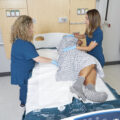
Offloading – sometimes called mechanical unloading – is the process of reducing force on body tissue by minimizing or reducing...
Continue Reading
When the clock is ticking and lives are on the line, precise patient handling sometimes takes a backseat to...
Continue Reading
Cardiac catheterization laboratories (often called Cath Labs or CCLs) are high-stakes environments for both patients and medical teams. Catheterization lab...
Continue Reading
Rates of Class 3 obesity are on the rise, necessitating efforts to improve bariatric care, including bariatric perioperative care....
Continue Reading